

If you have been working in UX measurement or survey research field and come across AI evaluation work, the first thing you will probably notice is that many aspects look very familiar.
There are constructs that need to be defined, tasks to be evaluated, rubrics to be designed, and scores to be measured and interpreted. The fields and the object of evaluations are fundamentally different but the underlying measurement problems are very similar to the ones we’ve been tackling for years.
Many UX researchers that I chatted with or had conversations about AI evals ask me what skills they need to be able to transition fields or start learning how to utilize their existing knowledge in the new and expanding area of AI evals. I am going to start a series of blog posts as a practical guide to making the transition from UX measurement to AI evals measurement.
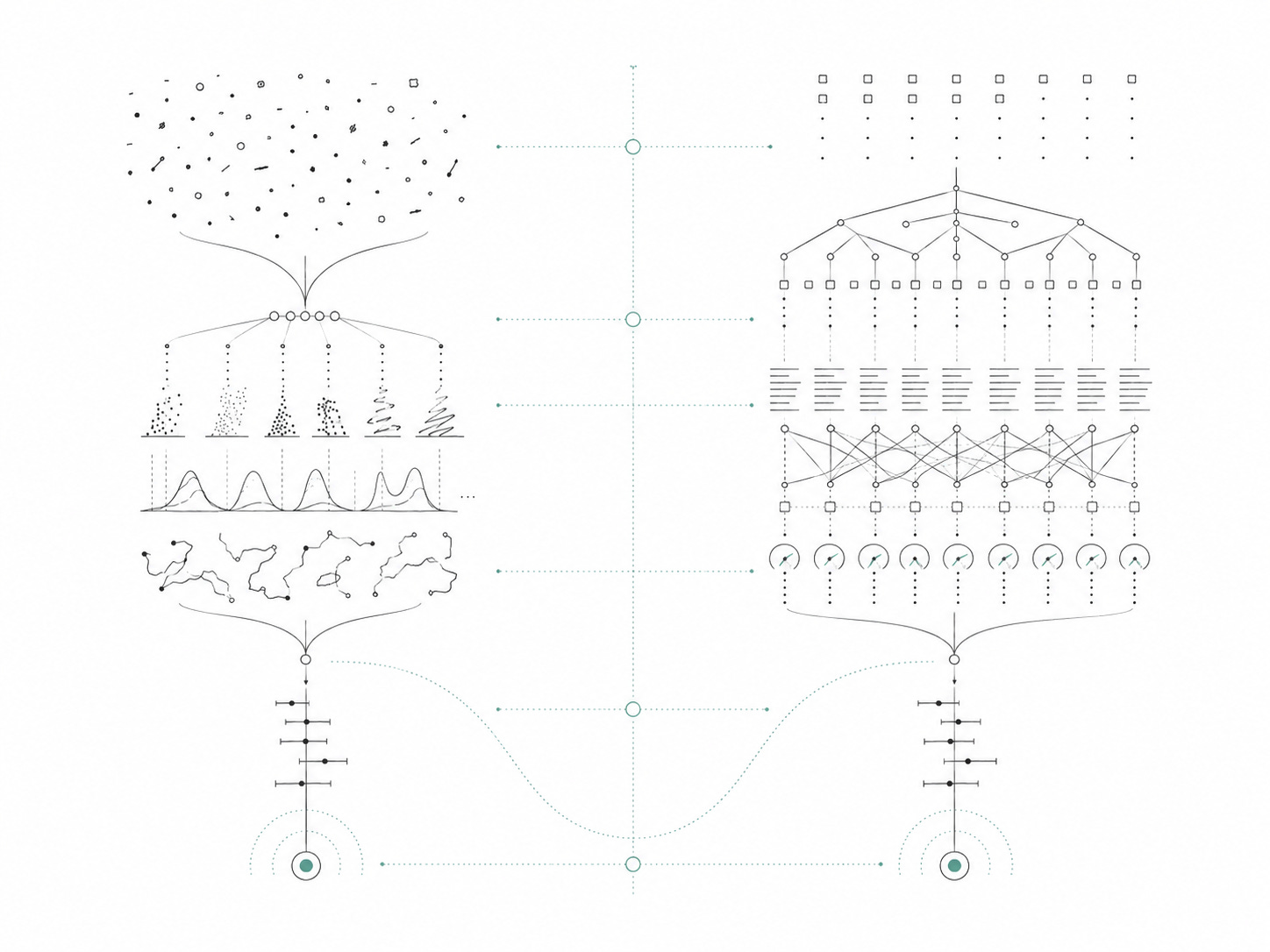
In this part 1, I will provide an overall map of AI evaluation process and discuss which of our skills are transferrable and what new skills we need to acquire and in the subsequent posts I will cover each aspect of evaluation process in more depth:
Part 2: Constructs. Defining constructs, separating dimensions and validating the scale.
Part 3: Tasks. Designing situations and tasks that need to be evaluated.
Part 4: Build an eval from scratch. A full worked example, from a product question to tasks, grades, and a readout.
Part 5: Sampling. Sampling tasks to represent product use, weighting results, and choosing the number of tasks and trials.
Part 6: Rubrics and scoring. Choosing criteria, defining meaningful scores, and testing whether the rubric measures what we intended.
Part 7: An LLM grader for qualitative analysis. An eight-dimension quality framework, a worked example using real interviews, and a grader to use on your own research.
Planned: Judges. Studying how human and model judges interpret a rubric, diagnosing disagreement, and testing what influences their decisions.
Planned: Aggregation and interpretation. Deciding how results should be combined and how to analyze and interpret scores.
Planned: Validation. Validating the eval, ensuring we are measuring right things and our conclusions remain valid.
I will try to write and publish one part per week.
The map of the evaluation process
Let’s start with taking an evaluation process and work backwards from the decisions that the eval is supposed to inform and claims we need to make:
Decision → claim → construct → task set → observable evidence → judge → score
Here are the seven questions I would try to answer for each eval:
Decision: What decisions are we informing?
Claim: What claim do we want to support?
Construct: What quality or capability are we evaluating?
Tasks: Which situations should we include in the task set?
Evidence: What can the judge observe and use as evidence?
Judging: How should the judge process that evidence into a category or score?
Score: What does the final result summarize?
These questions help us identify the kind of research problem we are dealing with. If evaluators understand the rubric differently, we have a response-process problem. If the tasks cover only a narrow slice of the types of qualities of capabilities we are evaluating, we have a sampling and coverage problem. If several qualities are collapsed into one number with no rule for trading them off, we have a construct and scoring problem. If the score is stable but unrelated to the decision it is meant to inform, we have a validity problem.
What UX and survey researchers already bring to AI evaluation
If you come from UX research, survey research, or another measurement-heavy field, you already have a good baseline for measurement that is needed for AI evaluation.
The objects of evaluations between product UX research, human attitudinal research and AI evals are different. But many of the research problems and methodological foundations underneath both are similar. Instead of measuring satisfaction, trust, comprehension, or product behavior, we may be evaluating helpfulness, instruction following, reasoning, or whether a model can complete a particular kind of task.
Below, I will go through the skills that transfer and the areas where researchers need to build new fluency.